
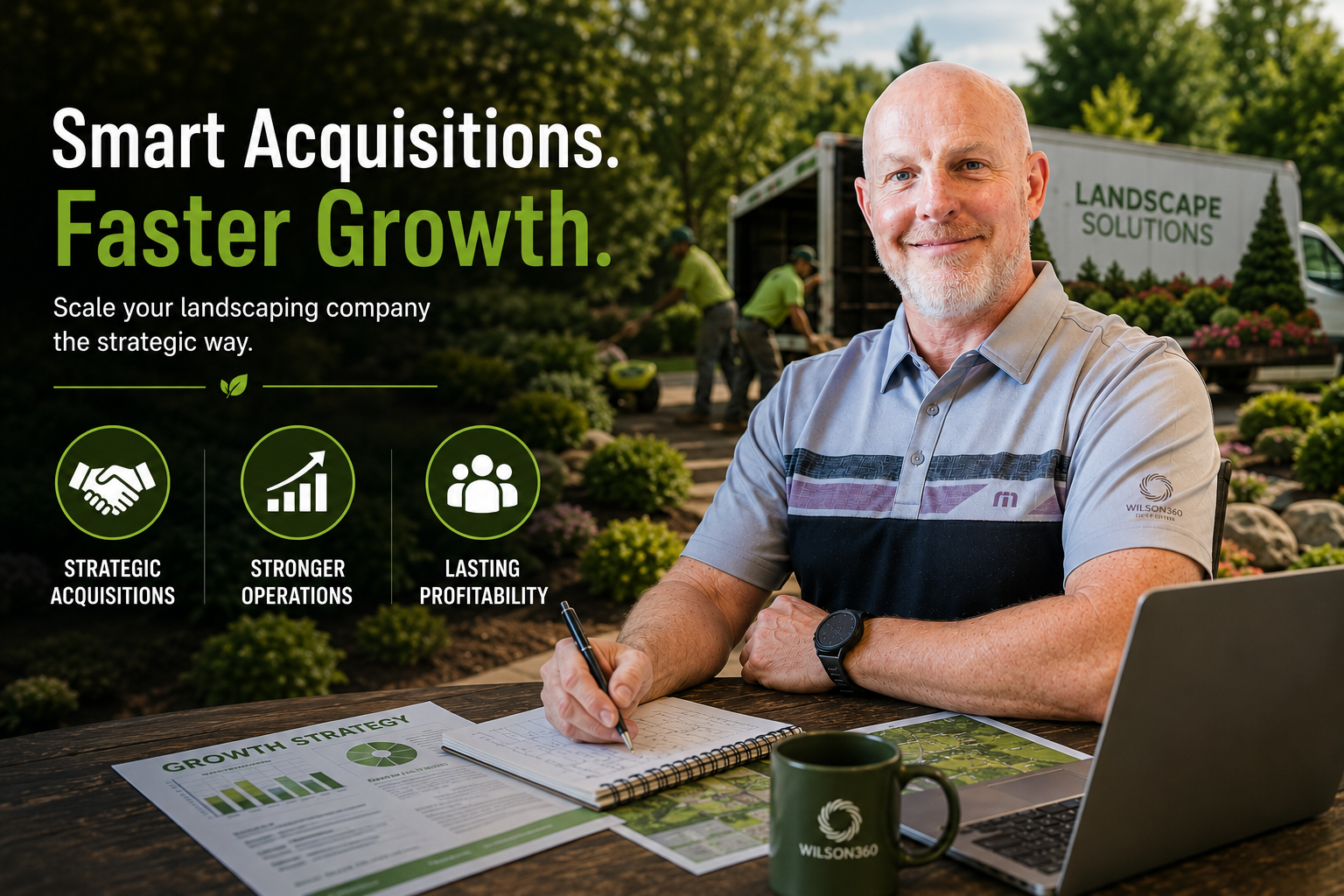
Why Small Acquisitions Are Quietly Becoming the Fastest Way to Scale a Landscaping Company
You can only hire, market, and sweat your way to the next revenue tier for so long. At some point every owner serious about scaling a landscaping company runs into the same wall: organic growth is slow, expensive, and increasingly hard to pull off in a market where crews are scarce and customer acquisition costs keep climbing. That is exactly why more landscape leaders are buying growth instead of building it one lawn at a time.
Acquiring a smaller competitor is no longer an exotic move reserved for private-equity-backed roll-ups. It has become a practical, repeatable lever for owners in the $3M to $20M range who want to add revenue, crews, and market share without waiting three years for it to compound. Done right, a single small acquisition can move the needle further in one quarter than a full season of aggressive marketing.
Why Organic Growth Alone No Longer Gets You There
Growing through marketing, hiring, and new locations still works. It is just slow and getting slower. Skilled labor is the tightest it has been in a decade, and wage inflation means every new crew you build costs more than the last one. Customer acquisition is no easier; the cost to win a new maintenance client through paid channels has climbed steadily, and the payback period keeps stretching.
None of that means organic growth is dead. It’s just no longer enough on its own. Owners who are serious about scaling a landscaping company are pairing steady organic effort with targeted acquisitions that deliver revenue, people, and route density in a single transaction. That combination is what separates companies that plateau at $5M from the ones that push past $15M.
How a Small Acquisition Accelerates Growth
1. Instant revenue and recurring cash flow
The biggest advantage of buying an established landscape company is that you inherit its book of business on day one. Recurring maintenance contracts, loyal accounts, and predictable monthly revenue transfer with the deal. Instead of spending 18 months building a pipeline, you are billing existing customers the month you close. For an industry where cash flow swings hard with the seasons, that stability is worth real money.
2. Market expansion without starting from zero
Buying a company in an adjacent city or territory hands you an established reputation, existing route density, and local relationships that would take years to build from a cold start. You skip the slow, risky ramp of opening a green-field branch and step straight into a market where the phone already rings.
3. A crew and management layer that already works
In a labor market this tight, buying a company is often the fastest way to acquire experienced crew leaders, account managers, and office staff who already understand daily operations. You are not just buying revenue — you are buying the people who produce it, which solves the single hardest problem most growing landscape companies face.
Where the Best Acquisition Opportunities Are Hiding
1. Owner retirement and succession sales
A large share of landscape company owners is within a decade of retirement, and many have no succession plan. These businesses typically come with loyal, long-tenured customers and experienced employees. Owners in this position usually care as much about finding a trustworthy buyer as they do about price, which makes them some of the most attractive targets available.
2. Small local competitors
Acquiring a competitor down the road does three things at once: It grows your customer base, removes a bidder from your market, and expands your service area. For owners focused on route density and margin, tucking in a nearby competitor is often the highest-return move on the board.
3. Family-owned businesses without a successor
Plenty of well-run, family-owned landscape companies reach a point where the next generation has no interest in taking over. These businesses tend to carry deep community relationships and long-term clients — the kind of goodwill you cannot buy with any marketing budget.
The Mistake That Wrecks More Deals Than Any Other
The single most expensive acquisition mistake is paying more than the business is worth. It happens when owners let competitive pressure or optimism drive the price instead of the numbers. Overpay and you spend years earning back money you never needed to spend, all while carrying more financial risk than the deal was ever worth. A disciplined valuation, grounded in the target’s real financial performance, recurring revenue, and asset base, is what keeps an acquisition from quietly becoming a liability.
Why Consulting for Landscape Companies Makes Acquisitions Work
Most owners buy one, maybe two companies in their careers. The people you want to advise you have done it dozens of times. That’s what you get when you work with a landscaping consulting company: an experienced partner who has sat on both sides of the table and can spot where deals may wrong before they close.
1. Finding the right targets
Identifying which companies are worth pursuing — and which look good on paper but will drain you post-close — is half the battle. The right advisor helps you screen targets against your service mix, growth goals, and long-term strategy, so you spend your time on deals that actually fit.
2. Valuation you can defend
A professional valuation tells you whether the asking price reflects the company’s real market position, assets, and financials, or the seller’s wishful thinking. It is your best protection against overpaying and your clearest path to maximizing return on the capital you deploy.
3. Negotiation and deal structure
Price is only one line in a good deal. How the agreement is structured — earn-outs, transition periods, retention of key people, protection against surprises — often matters more than the headline number. Experienced advisors help you build a deal that protects your interests long after the ink dries.
The Bottom Line
Scaling a landscaping company in today’s market takes more than organic hustle. Marketing, hiring, and new locations still matter, but the owners pulling away from the pack are the ones pairing that effort with disciplined, well-advised acquisitions. Every deal carries risk, and every risk is manageable with the right planning and the right people in your corner.
If you are ready to grow through acquisition instead of grinding it out one client at a time, Wilson360 provides trusted consulting for landscape companies built specifically for the green industry.
Explore our consulting services | To Learn about our CEO Peer Groups
Frequently Asked Questions
What is the fastest way to scale a landscaping company?
The fastest path is usually a strategic acquisition of a smaller company that already has recurring contracts, experienced crews, and an established customer base. Buying that book of business moves you further, faster, than organic marketing and hiring alone.
Why are small acquisitions becoming popular in the landscaping industry?
They let landscape companies add customers, enter new service areas, strengthen their workforce, and boost revenue without building everything from scratch, sidestepping the time and cost of purely organic growth.
How does landscape business consulting help with acquisitions?
Landscape business consulting helps you identify the right targets, run a defensible valuation, negotiate favorable terms, and build an integration plan that supports long-term growth while reducing financial risk.
What should I look for before buying another landscaping company?
Examine financial performance, customer retention, equipment condition, crew experience, reputation, and the strength of recurring contracts. Thorough due diligence is what keeps a good-looking deal from becoming an expensive one.
Is acquiring another company better than growing organically?
Neither is strictly better. Acquisitions deliver faster results by adding established revenue, customers, and people, while organic growth builds durable brand strength. Most owners scaling a landscaping company use both.
What are the biggest risks when acquiring a landscaping business?
Overpaying, inaccurate financials, customer loss after closing, employee turnover, and poor integration. Sound planning and experienced guidance shrink every one of those risks.
What is strategic consulting in the green industry?
Strategic consulting for the green industry helps landscape and outdoor-service businesses build growth strategies, evaluate acquisitions, sharpen operations, and plan for long-term, profitable success.