
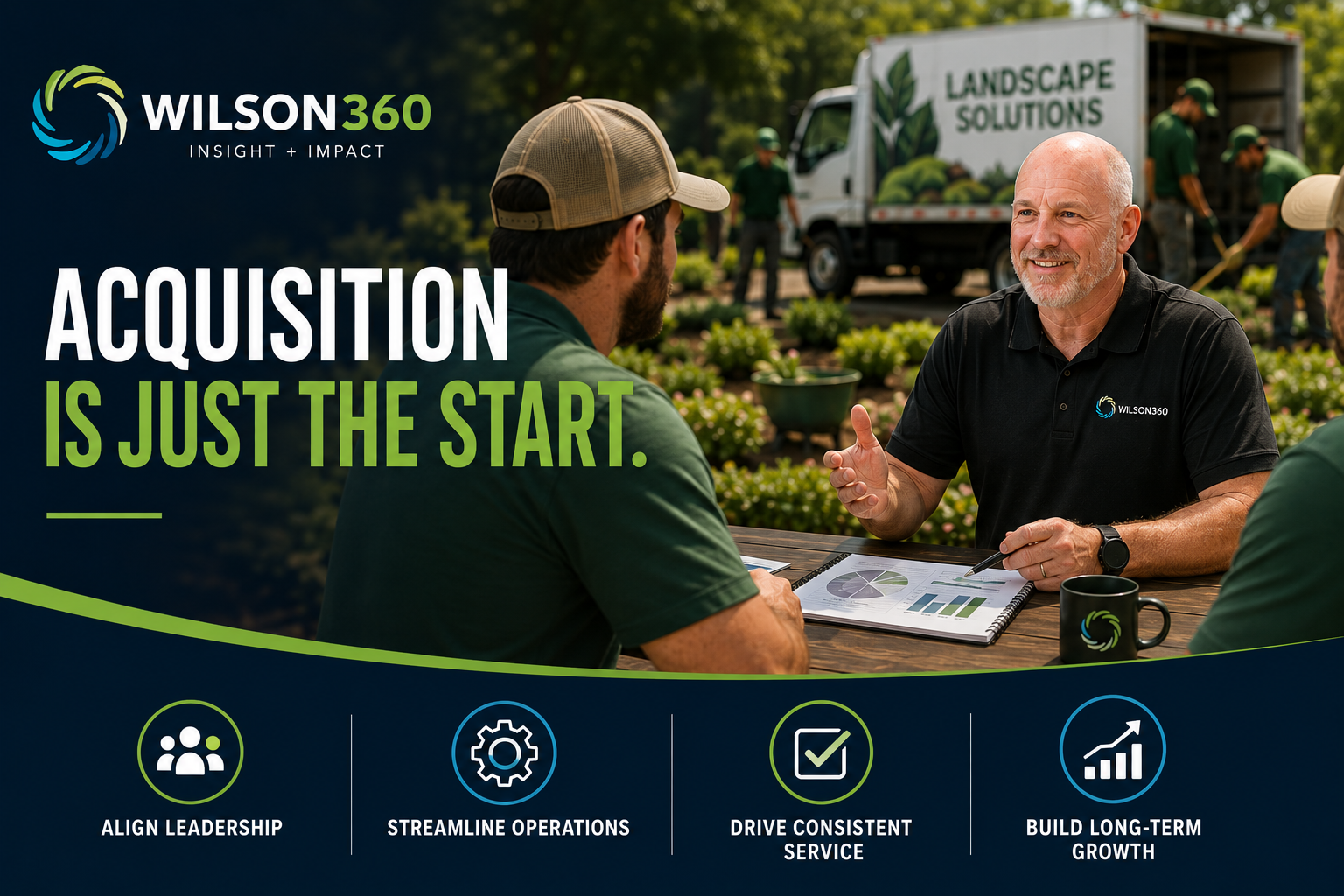
The Deal Is Closed. Now the Hard Part Begins: Integrating Teams and Operations After an Acquisition
Closing an acquisition feels like the finish line. It is not. The signatures are the easy part; the real work starts the morning after, when two sets of crews, systems, and cultures have to become one company. This is where most acquisitions underperform. Not because the deal was wrong, but because nobody built a plan for what happens next. That gap is exactly what operational consulting landscaping is designed to close.
When integration is left to chance, the symptoms show up fast: confused employees, dropped service standards, and productivity that stalls right when you need momentum. When it is planned, the acquisition delivers everything you paid for.
Why Integration Decides Whether the Deal Was Worth It
Completing an acquisition is a milestone, not an outcome. The value you projected in the deal model only materializes if you can bring together two teams, two sets of customer expectations, and two ways of running daily operations — without dropping the ball on service. Without a structured plan, even a strong acquisition struggles to deliver, and the downside is real: employee turnover, inconsistent service, thinner margins, and communication gaps that erode the goodwill you just bought.
Operational consulting landscaping gives you a structured process for that transition, so the combined business grows instead of grinding. The goal is simple: one company, one standard, one experience for the customer, no matter which crew shows up.
The Integration Challenges Every Landscape Company Hits
1. Two cultures that do not automatically merge
Every landscape company has its own habits, values, and way of treating customers. After a deal, those cultures do not blend on their own. Leaders must build trust, set clear expectations, and give both teams a shared vision worth buying into. This is where leadership development for CEOs earns its keep. Guiding people through change is a skill, and it is the one that most determines whether integration sticks.
2. Operations and service standards that do not match
Different companies run different workflows, scheduling systems, and service standards. Left unaddressed, those differences produce errors and inconsistent quality. Service Operations Consulting builds consistent processes that reduce mistakes, lift efficiency, and give every customer the same experience regardless of which team serves them.
How Operational Consulting Landscaping Smooths the Transition
1. Map how both companies actually operate
The first step is an honest look at how each business handles scheduling, equipment, reporting, and customer service. That comparison surfaces the best practices worth keeping from each side and flags the weak spots that need fixing before they become customer complaints pour in.
2. Standardize without stopping the trucks
The trick is building consistent processes while crews keep serving customers on time. Service Operations Consulting sequences introduce shared workflows and reporting in a way that improves efficiency without disrupting daily service.
Consider a simple example. One company runs on paper schedules; the other uses digital scheduling software. Merge them without a plan and crews miss deadlines and blow assignments. Move both onto a single scheduling system with standardized reporting, and you get a cleaner workflow and better communication almost immediately.
Leadership Alignment Is the Real Driver of Change
During any acquisition, employees watch their leaders for direction and reassurance. When leaders communicate the change clearly and early, people stay engaged and pull toward a common goal. When they go quiet, rumor fills the silence. Strong, aligned leadership reduces uncertainty and builds trust across newly combined teams faster than any policy memo ever will.
Building Long-Term Performance with Service Operations Consulting
Once the deal closes, delivering the same quality across every location is what protects the customer trust you just acquired. Service Operations Consulting helps landscape companies sharpen workforce planning, standardize the customer experience, and build efficient processes that lift productivity. When every team works from the same playbook, customers get a consistent experience, and that consistency is what compounds into enterprise value.
The Bottom Line
A successful acquisition is not measured by the closing date. It is measured by how well operations, leadership, and people come together in the months that follow. Align your teams, keep communication clear, standardize your processes, and you build a stronger foundation for long-term growth and better service.
Owners who invest in operational consulting, service operations support, and leadership development are the ones who capture the full value of every deal. Wilson360 helps landscape leaders integrate teams and operations, so acquisitions actually pay off.
See our consulting services Explore executive coaching
Frequently Asked Questions
What is operational consulting in landscaping?
Operational consulting in landscaping helps companies improve daily operations, streamline workflows, standardize processes, and raise efficiency. It is especially valuable after an acquisition, when two sets of systems have to start working as one.
Why is post-acquisition integration important for landscape companies?
Integration is what turns two companies into one profitable business. Without a structured plan, acquired companies often see lower productivity, inconsistent service, and employee turnover that erodes the value of the deal.
How does Service Operations Consulting support integration?
Service Operations Consulting standardizes workflows, improves scheduling, optimizes resources, and creates consistent service across locations, so a newly acquired business operates efficiently instead of chaotically.
What are the biggest operational challenges after acquiring a landscaping company?
Merging cultures, aligning leadership, standardizing procedures, integrating technology, holding customer satisfaction steady, and keeping communication clear between teams.
How does leadership development for CEOs improve post-acquisition success?
Leadership development for CEOs builds the skills to communicate clearly, manage organizational change, earn employee trust, and guide teams through integration without letting performance slip.
What role do leadership consultants play in landscaping businesses?
Leadership consultants help owners strengthen leadership skills, improve collaboration, manage change, and build growth strategies that support successful acquisitions and operational excellence.
How long does it take to fully integrate an acquired landscaping company?
It depends on the size and complexity of the deal, but most landscape companies need several months to fully align operations, leadership, technology, and culture while keeping service quality high.