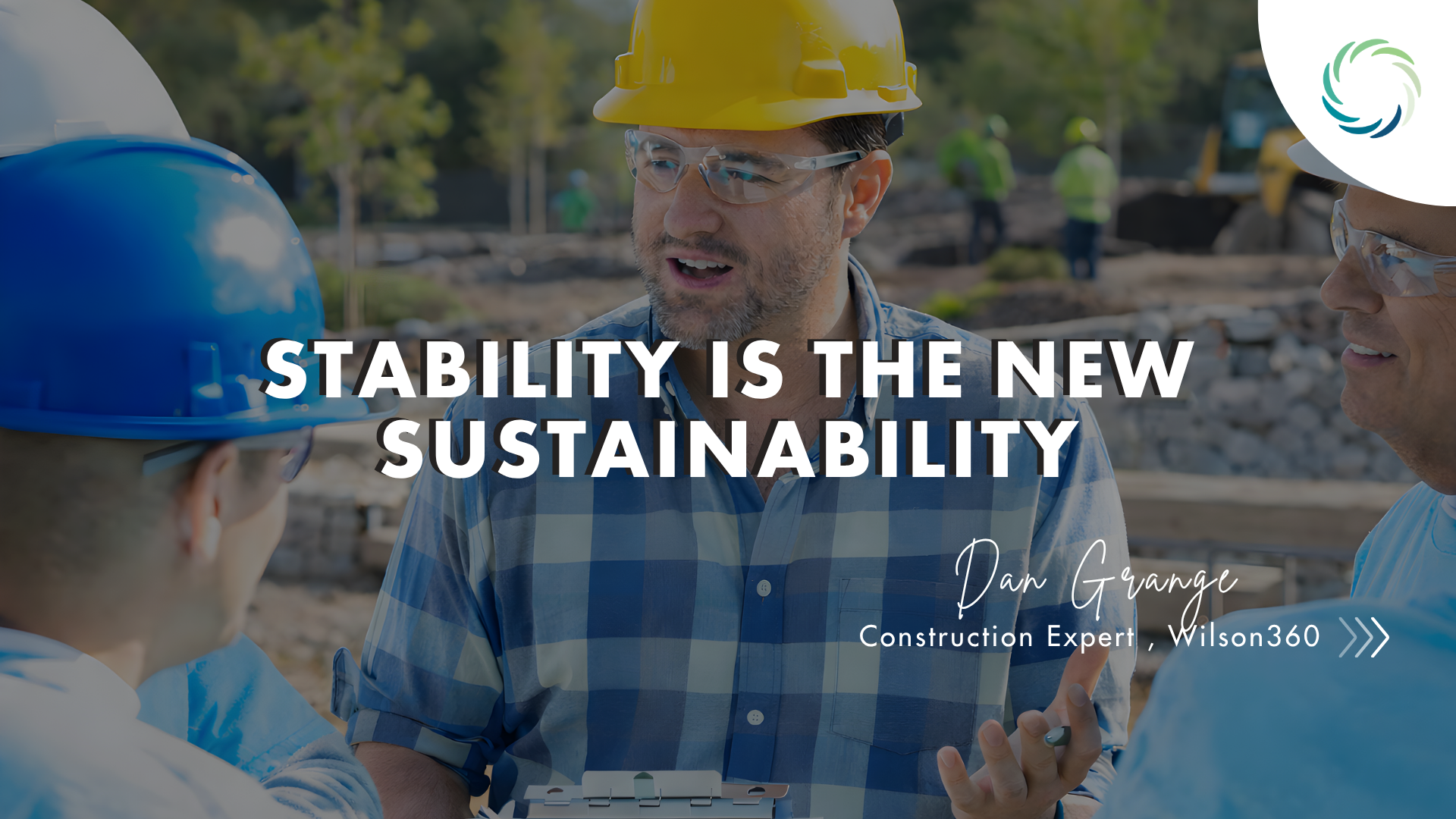
Stability is the new sustainability
By Dan Grange
In commercial landscape construction, sustainability is often discussed in terms of materials or environmental standards. Those issues matter. But from an operational standpoint, the most immediate threat to sustainable performance is workforce instability. When crews turn over, projects do not just slow down; they lose rhythm. The job still gets completed, but not with the same level of control. Workforce stability is not a cultural initiative. It is an operational system.
Stop hiring reactively
Across multiple markets, one pattern repeats: When hiring is driven by urgency, standards change.
A project is awarded, labor is needed quickly and recruiting becomes reactive. The result is short-tenure employees who were never aligned to production expectations in the first place.
In markets where I’ve worked with recruiting teams, the difference between a stable branch and a struggling one often came down to whether hiring standards held when backlog pressure increased.
Sustainable firms recruit against defined field standards, not project panic. That means clear criteria beyond basic skill: attendance reliability, ability to follow sequencing, equipment familiarity and coachability. Recruiters who understand those standards hire differently than those simply filling open slots.
When hiring discipline holds steady, regardless of backlog pressure, workforce volatility decreases.
Treat the first 30 days as production preparation
Most onboarding focuses on paperwork and safety orientation. That is necessary but not sufficient.
For a new hire in landscape construction, the first 30 days set the tone for production consistency. Strong firms assign direct supervisory accountability during that window. Expectations are specific: following safe practices, keeping up with the crew’s pace, ability to follow directions and showing up on time and ready to work.
Some companies formalize this with structured 30-60-90-day evaluations tied to measurable criteria. Not just personality fit, but performance, attendance, safety compliance and teamwork. When expectations are explicit, early turnover declines and productivity accelerates. Predictable production starts with predictable onboarding.
Develop foremen with operational awareness
Foremen influence project success more than any other role in field operations, yet many are promoted based solely on tenure or technical skill.
Structured development changes that outcome. Foremen who understand how labor hours tie to project budgets manage sequencing and crew deployment differently.
On a large commercial installation, a stable four-person crew working under a developed foreman consistently completed irrigation phases faster than rotating crews on similar projects. The difference was not effort. It was familiarity, process discipline and clear task ownership.
Leadership continuity reduces labor challenges. I have seen a company’s workforce stabilize within a single season when foreman development became intentional.
Retention is a margin strategy
Replacing a field employee carries more cost than recruiting alone.
Stable crews operate with less micromanagement and fewer errors.
On a large commercial install, replacing just two experienced crew members mid-project can quietly throttle efficiency and add unplanned labor hours through correction, retraining and additional supervision. Those hours rarely appear as a line item labeled “turnover,” but they surface in compressed schedules, higher stress and tighter margins. Workforce instability often shows up financially long after the hiring decision was made.
Leadership responsibility
Workforce instability rarely occurs without tolerance from leaders. When leaders allow hiring standards to slip and onboarding to become inconsistent, project margins suffer. Landscape construction firms rigorously monitor estimating accuracy, production budgets and equipment investments. Workforce systems deserve the same level of attention.
If labor is treated strictly as a variable cost, volatility becomes the norm. If workforce development is treated as operational infrastructure, stability becomes repeatable. When workforce development is treated as operational infrastructure, stability shifts from a slogan to a discipline. Disciplined systems are what sustain performance year after year.
Reprinted with permission. GIE Media. Lawn & Landscape April 2026 (c)