
The Next Three Years Could Be Strong. Discipline Will Decide Who Benefits.
Economics, workforce trends, and decision quality
When the industry’s most experienced operators begin to align on the same signals, it’s worth paying attention.
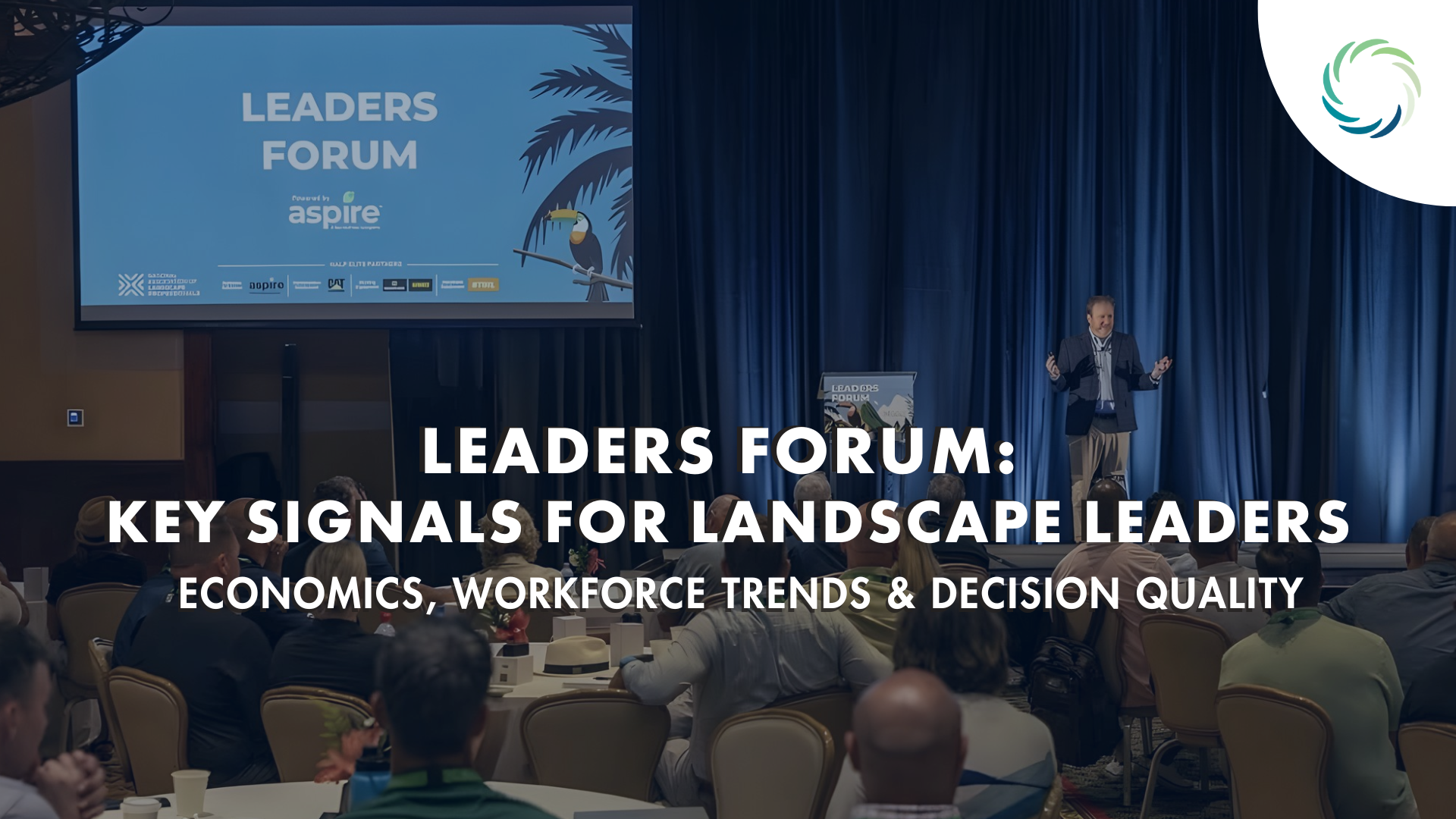
That was the undertone coming out of this year’s NALP Leaders Forum. Behind the presentations and panels, there was steady agreement on one thing: the next two to three years could be strong for landscape companies.
Demand remains healthy. H2B allocations appear more favorable this season. Backlogs are solid.
But the real conversation wasn’t about growth.
It was about what growth exposes.
Several of our team members came back saying the same thing in different ways: strong markets do not eliminate risk. They reveal it.
Workforce pressures are not disappearing. Gen Z participation remains near 56 percent. Global birth rates continue to decline. Immigration will continue shaping labor strategy, whether companies are proactive or reactive. These are structural realities, not short-term disruptions.
Growth does not solve that. It magnifies it.
The same theme surfaced around financial discipline. No one predicted immediate trouble, but there was clear acknowledgment that cycles return. Leaders who use healthy years to strengthen balance sheets, revisit long-term allocations before 2028, and examine capital structures will move into the next phase with options instead of constraints.
Several economic forecasts shared at the Forum reinforced the same point: sales may remain strong, but protecting profit margins will require more intentional cost management as labor, interest rates, and energy expenses rise.
Decision-making was another consistent thread.
A bias for action has built many successful landscape companies. It drives momentum. Yet several conversations highlighted how speed, especially in moments of stress, can override judgment. True scorecards are not informational tools. They force decisions. They surface drift early. They require accurate data and the right metrics to guide the company forward.
If the data is inaccurate or if the wrong metrics are driving conversations, growth does not solve the problem. It multiplies it.
One insight that resonated strongly was about collaboration. In rooms where expertise is distributed, outcomes improve when dialogue is intentional. Collaboration alone does not guarantee better decisions. Structure does. Leaders who surround themselves with peers willing to challenge assumptions improve decision quality before complexity demands correction.
The tone coming back to us was not urgent. It was deliberate.
There is momentum in this industry. There is opportunity in front of landscape leaders. There is also a clear understanding that preparation during strong years determines how well companies navigate the next cycle.
The next three years could be meaningful.
Those who elevate decision quality now will shape what that growth becomes.
We appreciate NALP’s continued leadership in bringing together industry operators and providing forward-looking economic insight.
Strong markets hide weak decisions.
Make sure yours are being challenged before the cycle does it for you.
If structured peer dialogue would strengthen your decision-making, explore our Wilson360 Peer Groups here: https://wilson-360.com/peer-groups/